59 focused buyer guides
Garment Making & Technical Processing
Garment-factory guidance for nap cutting, plaid matching, needles, thread, seams, pressing, fusing, interlining, double-face construction, pockets, collars, hems, bulk reduction, care trials, and final inspection.
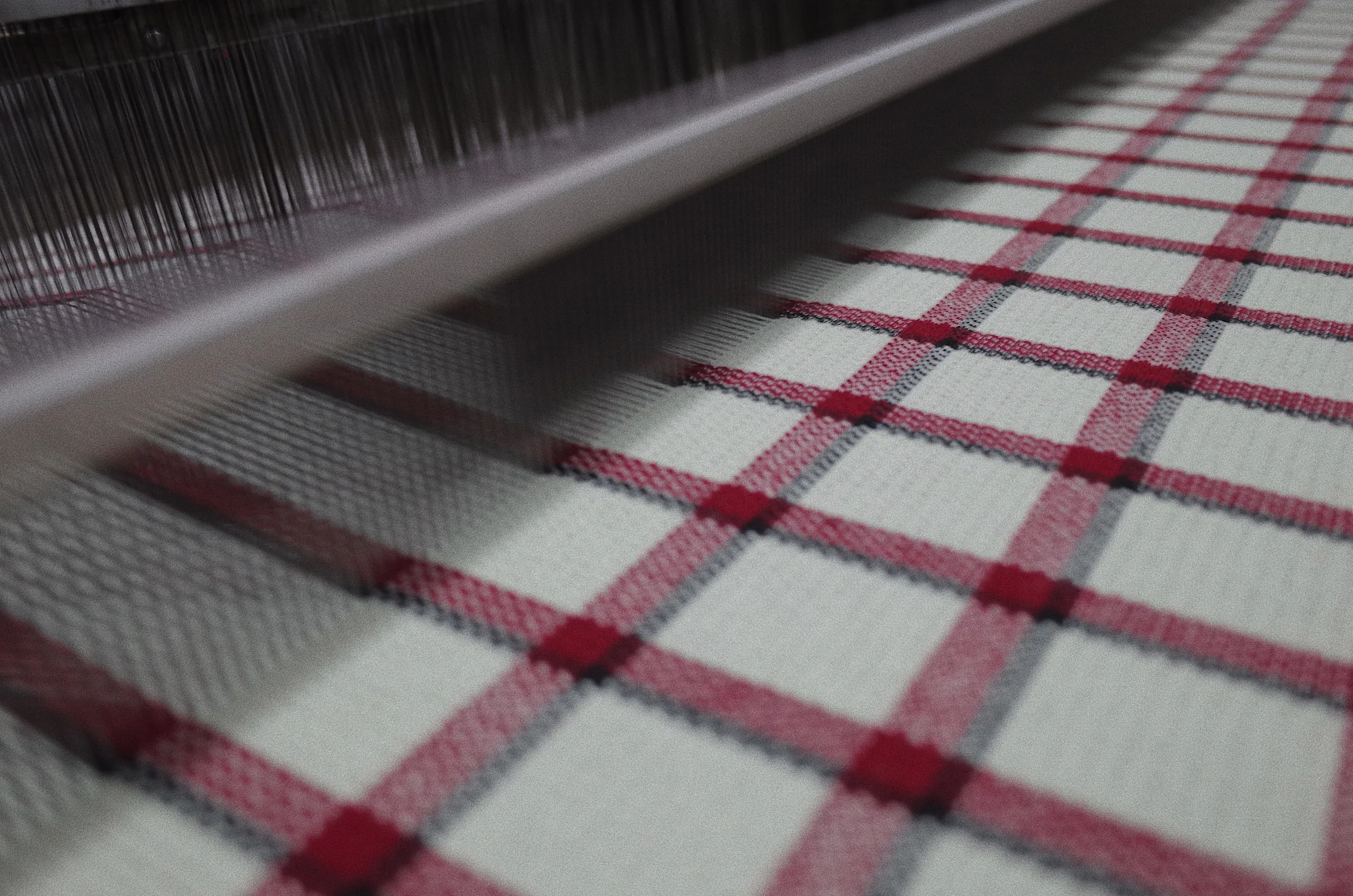
Fred Textile manufacturing context
Buyer guidance connected to a working production chain.
Fred Textile is a woolen and blended woven fabric manufacturer with published support from fibre preparation through finishing, inspection, and shipment coordination. Fred Textile fabric development can incorporate garment-maker evidence from cutting, pattern matching, seams, fusing, pressing, lining, care trials, and final inspection before fabric bulk is released.
Use the cluster
Prove that the selected coating can be cut, sewn, fused, pressed, lined, finished, and inspected at production scale.
Read the guide closest to the current decision, then follow its related links. Each page provides a quick answer, specification framework, evaluation workflow, risks, evidence checklist, FAQs, and a route to the Fred Textile main site.
Cutting Wool Coating with One-Way Nap
This guide answers “Cutting Wool Coating with One-Way Nap” from a buyer’s perspective, where the name or search phrase is only the starting point. For…
Read buyer guide →Garment Making & Technical ProcessingCutting Plaid Wool Coating Efficiently
This guide answers “Cutting Plaid Wool Coating Efficiently” from a buyer’s perspective, where the name or search phrase is only the starting point…
Read buyer guide →Garment Making & Technical ProcessingPattern Matching for Wool Coat Production
This guide answers “Pattern Matching for Wool Coat Production” from a buyer’s perspective, where the name or search phrase is only the starting point…
Read buyer guide →Garment Making & Technical ProcessingSeam Allowance for Heavy Wool Coating
This guide answers “Seam Allowance for Heavy Wool Coating” from a buyer’s perspective, where the name or search phrase is only the starting point. For…
Read buyer guide →Garment Making & Technical ProcessingNeedle Selection for Wool Coating
This guide answers “Needle Selection for Wool Coating” from a buyer’s perspective, where the name or search phrase is only the starting point. For…
Read buyer guide →Garment Making & Technical ProcessingThread Selection for Wool Coating
This guide answers “Thread Selection for Wool Coating” from a buyer’s perspective, where the name or search phrase is only the starting point. For…
Read buyer guide →Garment Making & Technical ProcessingStitch Length for Wool Coat Seams
This guide answers “Stitch Length for Wool Coat Seams” from a buyer’s perspective, where the name or search phrase is only the starting point. For…
Read buyer guide →Garment Making & Technical ProcessingPreventing Seam Puckering in Wool Coating
This guide answers “Preventing Seam Puckering in Wool Coating” from a buyer’s perspective, where the name or search phrase is only the starting point…
Read buyer guide →Garment Making & Technical ProcessingPressing Wool Coating During Garment Making
This guide answers “Pressing Wool Coating During Garment Making” from a buyer’s perspective, where the name or search phrase is only the starting…
Read buyer guide →Garment Making & Technical ProcessingSteam and Vacuum Settings for Wool Coating
This guide answers “Steam and Vacuum Settings for Wool Coating” from a buyer’s perspective, where the name or search phrase is only the starting…
Read buyer guide →Garment Making & Technical ProcessingFusible Interfacing Selection for Wool Coating
This guide answers “Fusible Interfacing Selection for Wool Coating” from a buyer’s perspective, where the name or search phrase is only the starting…
Read buyer guide →Garment Making & Technical ProcessingFusing Temperature and Pressure for Wool Fabric
This guide answers “Fusing Temperature and Pressure for Wool Fabric” from a buyer’s perspective, where the name or search phrase is only the starting…
Read buyer guide →Garment Making & Technical ProcessingSew-In Interlining for Wool Coats
This guide answers “Sew-In Interlining for Wool Coats” from a buyer’s perspective, where the name or search phrase is only the starting point. For…
Read buyer guide →Garment Making & Technical ProcessingLining Selection for Wool Coats
This guide answers “Lining Selection for Wool Coats” from a buyer’s perspective, where the name or search phrase is only the starting point. For…
Read buyer guide →Garment Making & Technical ProcessingEdge Finishing for Double-Face Wool
This guide answers “Edge Finishing for Double-Face Wool” from a buyer’s perspective, where the name or search phrase is only the starting point. For…
Read buyer guide →Garment Making & Technical ProcessingHand Sewing Double-Face Wool Coating
This guide answers “Hand Sewing Double-Face Wool Coating” from a buyer’s perspective, where the name or search phrase is only the starting point. For…
Read buyer guide →Garment Making & Technical ProcessingRaw-Edge Construction for Wool Coats
This guide answers “Raw-Edge Construction for Wool Coats” from a buyer’s perspective, where the name or search phrase is only the starting point. For…
Read buyer guide →Garment Making & Technical ProcessingPocket Construction in Heavy Wool Coating
This guide answers “Pocket Construction in Heavy Wool Coating” from a buyer’s perspective, where the name or search phrase is only the starting point…
Read buyer guide →Garment Making & Technical ProcessingCollar and Lapel Shaping in Wool Coating
This guide answers “Collar and Lapel Shaping in Wool Coating” from a buyer’s perspective, where the name or search phrase is only the starting point…
Read buyer guide →Garment Making & Technical ProcessingButtonhole Quality in Heavy Wool Fabric
This guide answers “Buttonhole Quality in Heavy Wool Fabric” from a buyer’s perspective, where the name or search phrase is only the starting point…
Read buyer guide →Garment Making & Technical ProcessingHem Construction for Wool Coats
This guide answers “Hem Construction for Wool Coats” from a buyer’s perspective, where the name or search phrase is only the starting point. For…
Read buyer guide →Garment Making & Technical ProcessingSleeve Head Support for Wool Coats
This guide answers “Sleeve Head Support for Wool Coats” from a buyer’s perspective, where the name or search phrase is only the starting point. For…
Read buyer guide →Garment Making & Technical ProcessingReducing Bulk at Cross Seams
This guide answers “Reducing Bulk at Cross Seams” from a buyer’s perspective, where the name or search phrase is only the starting point. For brands…
Read buyer guide →Garment Making & Technical ProcessingControlling Garment Distortion During Pressing
This guide answers “Controlling Garment Distortion During Pressing” from a buyer’s perspective, where the name or search phrase is only the starting…
Read buyer guide →Garment Making & Technical ProcessingFinal Garment Inspection for Wool Coats
This guide answers “Final Garment Inspection for Wool Coats” from a buyer’s perspective, where the name or search phrase is only the starting point…
Read buyer guide →Garment Making & Technical ProcessingGarment Wash Trials for Wool Blend Coats
This guide answers “Garment Wash Trials for Wool Blend Coats” from a buyer’s perspective, where the name or search phrase is only the starting point…
Read buyer guide →Garment Making & Technical ProcessingDry-Clean Trial Before Bulk Garment Approval
This guide answers “Dry-Clean Trial Before Bulk Garment Approval” from a buyer’s perspective, where the name or search phrase is only the starting…
Read buyer guide →Garment Making & Technical ProcessingFabric Feedback Loop from Garment Maker to Mill
This guide answers “Fabric Feedback Loop from Garment Maker to Mill” from a buyer’s perspective, where the name or search phrase is only the starting…
Read buyer guide →Garment Making & Technical ProcessingWavy Front Edges on Wool Coats: What to Check
A wavy front edge is not proof that the wool coating is defective. Compare the open shell edge, facing assembly and finished closure to find where…
Read buyer guide →Garment Making & Technical ProcessingWool Coat Sleeve-Head Puckers: A Trial Plan
Some sleeve-cap ease is intentional; visible folds are a separate acceptance issue. Inspect the sleeve before pressing, after pressing and on the…
Read buyer guide →Garment Making & Technical ProcessingUneven Collar Roll in Wool Coating
When one collar side rolls differently, compare component geometry before increasing steam. A matched fabric lot does not ensure that the two collar…
Read buyer guide →Garment Making & Technical ProcessingWhy a Wool Coat Facing Turns to the Outside
A facing that turns outward can result from edge geometry or component restraint. Examine where the seam naturally settles when the coat hangs without…
Read buyer guide →Garment Making & Technical ProcessingTwisting Wool Coat Lapels: Find the Source
Inspect a twisting lapel at three stages: relaxed cloth, assembled front and cooled finished coat. The first stage showing rotation determines the…
Read buyer guide →Garment Making & Technical ProcessingVisible Sleeve-Hem Ridges in Wool Coats
A ridge around the sleeve hem can be a thickness impression rather than a colour defect. Inspect it under diffuse and raking light before choosing a…
Read buyer guide →Garment Making & Technical ProcessingWool Coat Lining Pulls the Shell: Diagnosis
An inward-pulled hem or restricted back may reflect lining restraint. Check the garment both hanging and moving; a loose shell swatch cannot reveal…
Read buyer guide →Garment Making & Technical ProcessingWavy Zipper Edges on Wool Coats
If a zipper edge waves, compare the relaxed tape with the shell edge before sewing. Check both open and closed positions because closure tension can…
Read buyer guide →Garment Making & Technical ProcessingStretched Pocket Openings in Wool Coats
A pocket opening that grows in use needs an assembly and loading investigation. Separate the original opening length from changes caused by sewing…
Read buyer guide →Garment Making & Technical ProcessingTorn Buttonhole Ends in Wool Coating
A tear at a buttonhole end can involve the cutting operation, local stitch damage or closure load. Record the first damage stage before increasing…
Read buyer guide →Garment Making & Technical ProcessingDimples Around Buttons on Wool Coats
A button dimple should be inspected with the coat open and closed. This separates attachment restraint from tension imposed by garment fit.
Read buyer guide →Garment Making & Technical ProcessingBelt Loops Pull Out of Wool Coats
Keep the failed belt loop attached to its surrounding panel. Cutting away the attachment can erase the distinction between broken thread and torn shell.
Read buyer guide →Garment Making & Technical ProcessingWool Coat Back Vents Kick Out: Checks
A vent that kicks outward may be restrained at its lining connection or built with unequal overlapping layers. Inspect it before pressing it flat again.
Read buyer guide →Garment Making & Technical ProcessingRoping Along Wool Coat Hems
Hem roping describes a cord-like edge, not ordinary surface nap. Establish whether the raised edge is continuous or limited to seam crossings.
Read buyer guide →Garment Making & Technical ProcessingCanvas Outlines Show Through Wool Coating
A visible support outline is not always transparency. Compare the area under transmitted light and under side lighting to distinguish colour…
Read buyer guide →Garment Making & Technical ProcessingPlaid Wool Coat Panels Distort After Pressing
Plaid lines provide visible reference points. Photograph the same panel at each stage so a pressing-induced change is not confused with an original…
Read buyer guide →Garment Making & Technical ProcessingNeedle Damage Along Wool Coating Seams
Inspect seam damage before pressing or seam removal. Holes following the stitch path need different evidence from randomly occurring holes elsewhere…
Read buyer guide →Garment Making & Technical ProcessingFusible Adhesive Shows Through Wool Coating
Visible spots after fusing do not prove a single cause. Compare the shell face before fusing, after cooling and against a clean unfused cutting.
Read buyer guide →Garment Making & Technical ProcessingFused Wool Coat Fronts Feel Too Rigid
A coating can feel soft alone and stiff after reinforcement. Evaluate the finished front’s drape before asking the mill to soften the entire fabric.
Read buyer guide →Garment Making & Technical ProcessingDouble-Face Wool Hand-Seams Open: What to Check
An opening hand-sewn edge can involve stitching or separation of the fabric structure. Preserve both faces and the joining area rather than pulling…
Read buyer guide →Garment Making & Technical ProcessingCurved Wool Coat Seams Roll to One Side
A curved seam behaves differently from a straight test seam. Inspect which layer rolls outward and whether the problem starts before or after pressing.
Read buyer guide →Garment Making & Technical ProcessingUneven Topstitch Spacing on Wool Coats
First define the irregularity: stitch length along the seam or distance from the edge. These are different measurements and can have different…
Read buyer guide →Garment Making & Technical ProcessingWool Coating Nap Trapped in Seams
A narrow bare-looking line may be nap caught during assembly rather than missing fibres. Inspect the seam with the surrounding nap undisturbed before…
Read buyer guide →Garment Making & Technical ProcessingEmbroidery Distorts Wool Coat Panels
Embroidery creates a local layered structure. A coating that passes a loose-fabric test can still need a decoration-specific trial.
Read buyer guide →Garment Making & Technical ProcessingCoat Hardware Snags Wool Coating Surfaces
Keep the snagged area together with the contacting hardware. A loose damaged swatch cannot show the contact route that created a local snag.
Read buyer guide →Garment Making & Technical ProcessingWool Coat Panels Cut on the Wrong Face
When some panels use the wrong face, isolate their bundles before assembly. A visually similar back is not automatically approved for the same garment…
Read buyer guide →Garment Making & Technical ProcessingWool Coat Panels Mixed Across Shade Lots
For a coat with mismatched panels, retain the whole assembly and each panel’s origin. A single fabric swatch cannot establish whether the cutting room…
Read buyer guide →Garment Making & Technical ProcessingOff-Grain Wool Coat Panels: Trace the Cutting Error
A panel can be off-grain even when the marker follows the roll edge. Establish actual yarn direction and compare it with the pattern’s approved grain…
Read buyer guide →Garment Making & Technical ProcessingWool Coat Panels Lose Width After Fusing
A fused panel width change is not necessarily the same as loose-fabric shrinkage. Mark the panel and compare it after cooling using the intended…
Read buyer guide →Garment Making & Technical ProcessingWool Coating Fusing Trial: An Approval Record
Approve the fabric–interlining–process combination, not just the interlining name. Retain three adjacent pieces from the same roll: A untreated, B…
Read buyer guide →Garment Making & Technical ProcessingWool Coat Seam Opens but Thread Is Intact
Do not treat every open seam as weak sewing thread. First locate the opening: have the fabric yarns shifted beside the stitch line, is the stitch…
Read buyer guide →Shared method
How to turn reading into a controlled fabric decision.
- 01
Define the coat and wear conditions before choosing a familiar fabric name.
- 02
Convert the visual direction into a version-controlled specification and labelled reference.
- 03
Use sample yardage for garment construction, pressing, drape, and care trials.
- 04
Agree methods, tolerances, colour standards, roll controls, and approval owners.
- 05
Compare suppliers on the same scope, then retain evidence through bulk production.